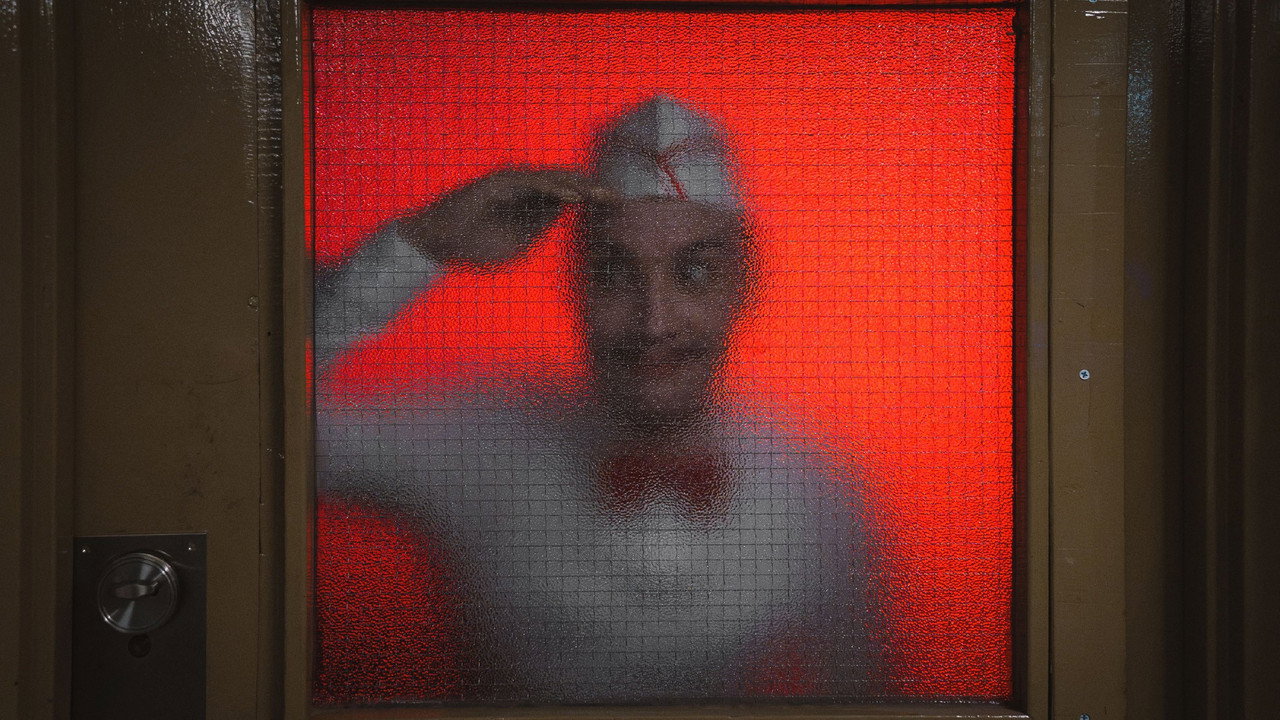
Your Heart Will Be Broken arrived on Russian streaming platforms on 5 June 2026, roughly ten weeks after its 26 March theatrical premiere, and is now available on Okko, START, Kion, Premier and Wink.
The film adapts Anna Jane's bestselling novel of the same name, the first book in her Bully and the New Girl series, which the publisher credits with millions of online reads before the adaptation went into production. Director Mikhail Vaynberg, trained at GITIS under Vladimir Khotinenko and Pyotr Fomenko, built his career on Russian television melodrama, including the long-running series Pregnancy Test; this is his highest-profile theatrical release to date. The story follows new student Polina Tumanova (Veronika Zhuravleva), who strikes a bargain with the school's dominant troublemaker, Dima "Bars" Barsov (Daniel Vegas): he shields her from bullying if she does what he says, an arrangement that curdles into real feeling as her family and classmates work to pull the pair apart. It was produced by START alongside Yellow Black and White, All Media Company and Sverdlovsk Film Studio.
The film performed strongly at the Russian box office before its streaming debut, taking the top spot in its opening week and finishing its theatrical run with just under 956 million rubles in total. That commercial appetite sits at odds with its critical reception: aggregated professional reviews on the Russian outlet Kritikanstvo put it at 62 out of 100, with several critics describing it as caught between fan fiction and reality-television melodrama. Specific complaints centered on dialogue reviewers called emotionally overloaded, a 126-minute runtime seen as bloated for a predictable plot, and direction from Vaynberg described as visually flat despite a cast more than one reviewer called talented. The recurring genre comparison in that coverage is to Western "bully romance" hits such as the After franchise, positioning the film within a recognizable international wave of dominant-boy, vulnerable-girl teen romances rather than as something Russian cinema hasn't attempted before.
The reason to choose this one now is less about surprise than about scale: it is the biggest domestic example yet of that bully-romance template landing in Russian mainstream cinema, backed by a real budget and a top-charting theatrical run rather than a niche streaming original. Its appeal is narrow by most critics' own account, aimed squarely at the teenage audience the novel already built rather than viewers looking for a subtler or more adult take on the genre; several reviews specifically flagged that the film's emotional register won't travel well outside that group. Beyond the box-office figures, the runtime complaint and the director's TV-melodrama background, PLOT could not verify additional detail on production choices or how closely the film follows the novel, and none of that should be assumed here.
This is a pick for viewers who already enjoy the After-style bully-to-boyfriend arc and want the biggest, most heavily produced Russian entry in that lane so far, not for anyone seeking a subtler or more critically admired teen drama; the novel's built-in fanbase and the film's box-office numbers explain its popularity far better than the reviews do.